Discover the maritime aspects of the Turks and Caicos Islands, an archipelago located in the Caribbean with strategic importance for navigation and maritime trade. This region offers clear waters, coral reefs, and essential ports for maritime activity. The Turks and Caicos Islands are known for their marine biodiversity, safe navigation conditions, and modern port infrastructures that facilitate maritime transport and logistical services.
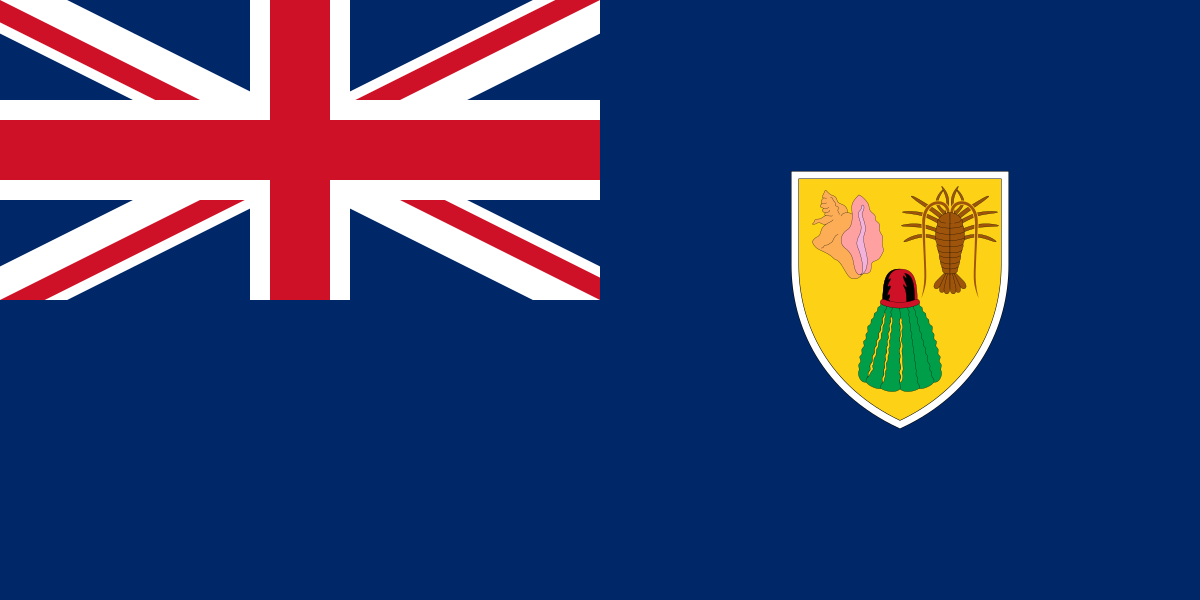
Explore the strategic ports and maritime infrastructure of turks_and_caicos_islands
Essential maritime information about Providenciales Port port for sea professionals
Essential maritime information about Cockburn Harbour Port port for sea professionals
Essential maritime information about Grand Turk Port port for sea professionals
Explore the strategic ports and maritime infrastructure of turks and caicos islands
The Turks and Caicos Islands, located in the Caribbean, represent a strategic maritime area due to their geographical position between the major shipping routes of the Atlantic and the Caribbean. This British Overseas Territory consists of about 40 islands and atolls, of which only eight are inhabited, offering exceptional marine diversity and opportunities for maritime trade, fishing, and nautical tourism. Navigation in the waters of the Turks and Caicos Islands is generally favorable thanks to the clarity of its waters and the presence of well-charted coral reefs that protect some of the most important coastal areas.
Port infrastructures in the Turks and Caicos Islands play a crucial role in local economic development. The main port is located in Providenciales, with modern facilities for cargo ships and cruise vessels, thus promoting commercial exchanges and tourism. This port is equipped to efficiently manage international maritime traffic with handling, storage, and maritime logistics services. Additionally, other small ports distributed across several islands provide access to less densely populated areas, supporting artisanal fishing and local nautical activities.
Regarding maritime safety, local authorities enforce strict measures for traffic management, environmental protection, and prevention of maritime incidents. Nautical charts are regularly updated to include reefs and protected areas, ensuring both safety and the conservation of the unique marine ecosystem. Rescue and monitoring services are also in place to respond quickly in case of emergencies at sea.
Navigation in the waters of the Turks and Caicos Islands is often considered safe, with generally stable weather conditions, although hurricane seasons require increased vigilance in summer and autumn. Currents and underwater topography are well known and clearly marked, facilitating the planning of maritime routes and cruises. These islands are also a popular destination for scuba diving, snorkeling, and sport fishing, thanks to their abundant marine life and intact coral reefs.
Furthermore, maritime authorities encourage sustainable practices to preserve natural wealth, notably through limiting fishing quotas and creating marine protected areas. These efforts contribute to maintaining ecological balance while enabling economic development linked to the maritime sector, including eco-tourism. Compliance with international and local maritime regulations thus ensures responsible exploitation of marine resources in this unique region of the world.
 Safecube